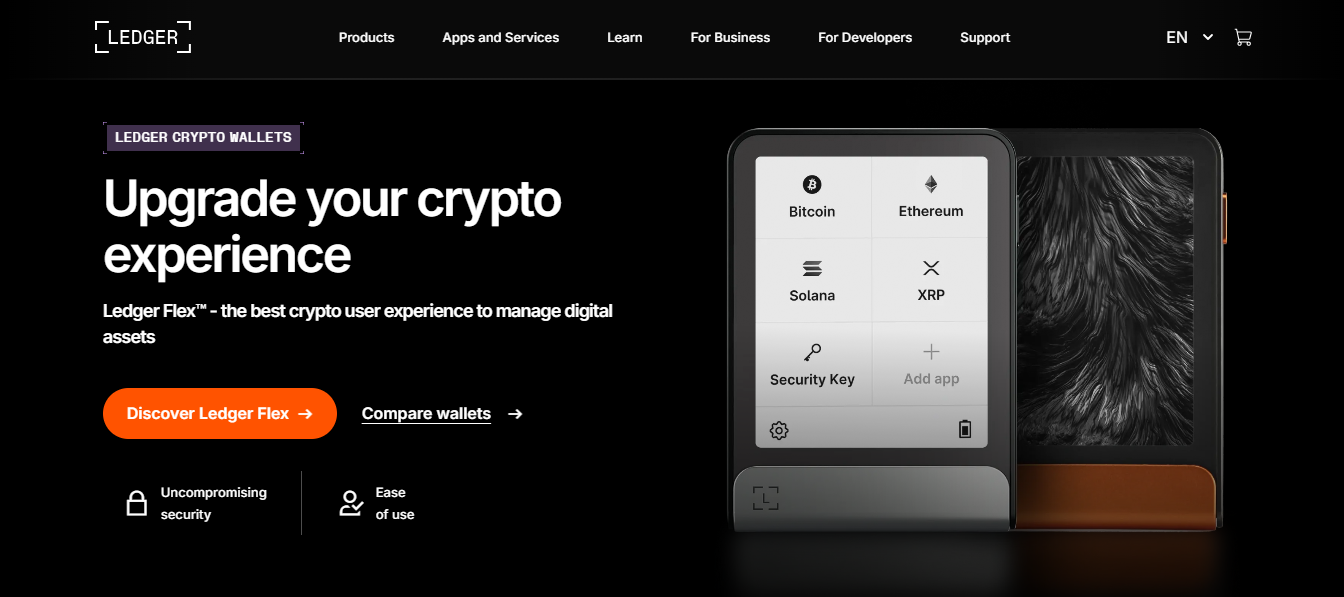
Ledger Live Desktop — Secure Crypto Management
Ledger Live Desktop is the official, non-custodial desktop application developed by Ledger, designed to integrate seamlessly with your Ledger hardware wallet and provide comprehensive control over your digital-asset portfolio from your computer. Available for Windows, macOS and Linux, it offers high-security architecture, intuitive user experience and support for a wide range of cryptocurrencies and Web3 services.
What it is
Ledger Live Desktop serves as the secure interface between your Ledger hardware wallet’s private keys and the blockchain networks you interact with. Private keys remain inside the device, while the desktop application facilitates account creation, transaction signing, staking, and token tracking in a dedicated local environment. According to Ledger support documentation, the app keeps “your data directly on your computer or phone, so there’s no need to sign in using an email and password.” :contentReference[oaicite:2]{index=2}
Key Features
- Secure account and device management: Add or remove accounts, install apps on your Ledger device, and manage your hardware wallet directly from Ledger Live Desktop.
- Comprehensive portfolio dashboard: View real-time balances, asset allocation and historical performance across supported networks and tokens.
- Transaction operations: Send, receive, swap and stake crypto assets—all confirmed on your hardware device to maintain isolated key control.
- Multi-asset support: Access thousands of coins and tokens across major blockchains—Bitcoin, Ethereum, Solana, Polkadot, and many more. :contentReference[oaicite:3]{index=3}
- Web3 & dApp connectivity: Explore decentralized finance (DeFi), non-fungible tokens (NFTs) and other blockchain-based services with confidence, while retaining private key security.
- Official updates and security enhancements: Ledger routinely releases firmware and software updates to protect your environment against emerging threats. :contentReference[oaicite:4]{index=4}
Why security matters
When managing digital assets, the most critical component is ownership of private keys. Ledger Live Desktop’s architecture ensures your keys never leave your Ledger hardware wallet. The desktop application acts purely as a facilitator. Ledger emphasises that “Your private keys never leave the device” to protect you from network or device-level threats. :contentReference[oaicite:5]{index=5}
The application does not require cloud-based login credentials, reducing exposure to phishing and credential-theft vectors. Instead, device confirmation ensures you have final sign-off on all transactions, reinforcing the principle of self-custody.
Getting started (Informational)
To begin using Ledger Live Desktop, download the application from the official website ledger.com/ledger-live. Choose the installer compatible with your operating system—Windows, macOS or Linux—and follow the standard installation flow. :contentReference[oaicite:6]{index=6}
Once installed, connect your Ledger hardware wallet via USB (or Bluetooth, if applicable) and unlock it with your PIN. Ledger Live Desktop will detect the device, allow you to initialise or restore, and then you may add your crypto accounts. Ensure your recovery phrase is securely written down and stored offline before you proceed. :contentReference[oaicite:7]{index=7}
Daily use & operations
After setup, Ledger Live Desktop becomes your primary interface for managing your crypto ecosystem. From the dashboard you may review current holdings, view recent transactions, install new coin-apps, access staking options, and initiate transfers—all confirmed on the hardware wallet screen. The device must be physically present and manually validated for each operation, thereby preserving the isolation of your private keys.
Maintenance & best practices
Security, performance and compatibility depend on maintaining both your Ledger hardware wallet firmware and Ledger Live Desktop software at up-to-date versions. Ledger support advises users to apply updates promptly and only download software from official channels. :contentReference[oaicite:8]{index=8}
Additional best practices include:
- Enable a strong local password lock in Ledger Live Desktop to guard against unauthorised access.
- Confirm transactions always on the hardware device screen — never rely solely on the desktop UI.
- Store your recovery phrase in a secure physical medium (paper, metal) and never save it digitally or share it. :contentReference[oaicite:9]{index=9}
- Download updates exclusively from
ledger.comand bookmark the official support site to avoid phishing. :contentReference[oaicite:10]{index=10}
Troubleshooting & support
If you encounter connectivity issues, sync delays, or firmware mismatches, first verify that your software version is current and your hardware wallet is properly connected. If problems persist, consult the official support documentation or submit a request via the Ledger website. :contentReference[oaicite:11]{index=11}
Conclusion
Ledger Live Desktop represents the cornerstone of a comprehensive crypto self-custody ecosystem—its blend of rigorous security, flexible asset management and broad protocol support makes it well-suited for both new and experienced users. When paired with a Ledger hardware wallet and disciplined operational hygiene, it enables confident, long-term digital asset stewardship.